
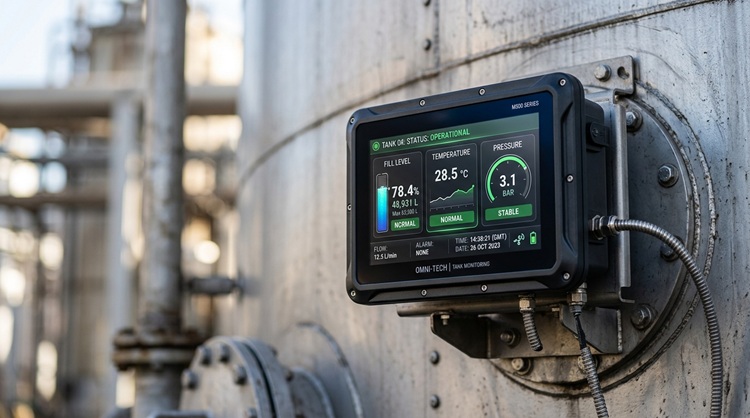
Houston doesn’t just use aboveground storage tanks. It depends on them. As the energy capital of the United States and one of the busiest petrochemical corridors in the world, the Greater Houston area puts aboveground tanks to work across more industries and applications than almost any other metro in the country. Here’s a look at the full range of what these structures actually do in and around Houston.
1. Crude Oil Storage
The most visible use of aboveground tanks in Houston is crude oil storage, and the scale of it is hard to overstate. Tank farms along the Ship Channel and throughout the surrounding industrial corridor hold millions of barrels of crude at any given time, buffering supply between pipeline delivery, refinery intake, and export loading. These are typically large-diameter API 650 welded steel tanks, often with floating roofs designed to minimize vapor loss from volatile product.
2. Refined Petroleum Product Storage
Once crude moves through a refinery, the products that come out the other side, gasoline, diesel, jet fuel, heating oil, and petrochemical feedstocks, all need somewhere to go before distribution. Aboveground tanks at product terminals throughout the Houston area hold these refined materials in segregated storage, keeping products separated by grade and specification until they’re loaded onto trucks, pipelines, or marine vessels for delivery.
3. Chemical and Petrochemical Feedstock Storage
Houston’s petrochemical complex along the Ship Channel is one of the largest in the world, and the facilities there consume enormous quantities of chemical feedstocks that arrive by pipeline, barge, and rail and wait in aboveground tanks before entering production processes. Ethylene, propylene, benzene, methanol, and dozens of other chemicals move through tank storage as part of continuous manufacturing operations that run around the clock.
4. Liquefied Natural Gas and NGL Storage
Natural gas liquids including ethane, propane, butane, and condensate are stored in aboveground tanks and pressure vessels throughout the Houston energy corridor. These products require tanks engineered for lower temperatures or higher pressures than standard liquid storage, and the facilities handling them are concentrated in areas with direct pipeline connectivity to gathering systems across the Texas Gulf Coast.
5. Industrial Water Storage
Large industrial facilities across Houston maintain significant aboveground water storage capacity for process cooling, boiler feed, fire suppression, and emergency response. Refineries and chemical plants in particular require reliable water supplies that can’t depend entirely on municipal systems, so onsite aboveground tanks provide the buffer volume that keeps operations running and fire protection systems functional when they’re needed most.
6. Wastewater and Produced Water Holding
Industrial operations generate wastewater and process effluent that can’t be discharged directly and needs to be held, treated, or transported. Aboveground tanks serve as holding vessels for these streams, giving facilities a place to accumulate volume before treatment, sampling, or offsite disposal. In oilfield-adjacent operations around Houston, produced water storage is a routine part of facility design.
7. Agricultural Chemical Storage
The agricultural regions surrounding Houston rely on aboveground tanks for storing fertilizers, herbicides, pesticides, and other agricultural chemicals at distribution and co-op facilities. Liquid fertilizer storage is particularly common, with large tanks at farm supply operations holding anhydrous ammonia solutions and urea ammonium nitrate for seasonal distribution to growers across the region.
8. Food Grade Liquid Storage
Houston’s port and distribution infrastructure supports a significant food and beverage supply chain, and aboveground tanks play a role in storing food-grade liquids including vegetable oils, liquid sugar, molasses, and beverage concentrates. These tanks are built to food-grade standards with appropriate interior linings, sanitary fittings, and cleaning access that standard industrial tanks don’t require.
9. Asphalt and Bitumen Storage
Road construction and maintenance across one of the country’s largest and fastest-growing metro areas requires a steady supply of asphalt and bitumen, both of which are stored in heated aboveground tanks that keep the material at the temperatures necessary to maintain workable viscosity. Asphalt terminals serving the Houston market hold product that moves continuously into paving and construction operations throughout the region.
10. Fire Suppression Water Reserves
Industrial facilities, commercial campuses, airports, and large institutional properties throughout Houston maintain dedicated aboveground tanks for fire suppression water storage. These tanks are sized and positioned to meet code requirements for fire flow duration and are kept separate from process water supplies to ensure availability during an emergency. In areas where municipal water pressure or flow capacity is insufficient, dedicated fire water tanks are often the only compliant solution.
11. Rainwater Harvesting and Stormwater Management
Industrial and commercial facilities across Houston increasingly use aboveground tanks for capturing and holding rainwater for reuse in irrigation, dust suppression, and non-potable process applications. Given Houston’s rainfall volumes and the ongoing attention to stormwater management in a region that has experienced repeated major flooding events, onsite storage capacity has practical value beyond simple conservation.
12. Marine and Port Fuel Storage
The Port of Houston is one of the busiest in the country, and the marine fueling operations that support it depend on aboveground tank storage for bunker fuel, marine diesel, and lubricants. Tank farms near marine terminals hold the fuel volumes necessary to service commercial vessels without supply interruptions, and the infrastructure supporting them is substantial given the volume of ship traffic moving through the port complex.
13. Power Generation Fuel Storage
Natural gas is the dominant fuel for power generation in Texas, but many facilities maintain aboveground tanks holding diesel or fuel oil as backup generation fuel for emergency power systems. Data centers, hospitals, refineries, and large commercial facilities throughout Houston keep reserve fuel in aboveground tanks sized to support extended operation during grid outages, a consideration that’s become more prominent following high-profile power reliability events in the state.
14. Specialty Chemical and Solvent Storage
Manufacturing facilities across the Houston area store specialty chemicals, solvents, and process fluids in aboveground tanks sized for their specific operational needs. These aren’t bulk commodity storage applications but rather purpose-specified tanks designed around the chemical properties of a particular product, including its reactivity, volatility, temperature sensitivity, and compatibility with various lining and fitting materials. The engineering that goes into specifying these tanks reflects the diversity of Houston’s manufacturing base and the range of materials it processes every day.
The Bigger Picture
The breadth of this list reflects something important about Houston’s economy and infrastructure. Aboveground storage tanks aren’t a niche product category serving a single industry. They’re load-bearing infrastructure for the full range of industrial, commercial, and municipal activity that makes the region function. Crude oil and chemicals get the most attention because the scale is so visible, but the same fundamental technology, a properly engineered, fabricated, and installed steel tank, shows up everywhere from food distribution terminals to hospital backup power systems to stormwater management facilities.
What all of these applications share is a demand for tanks that are built right from the start. Houston‘s climate, its regulatory environment, and the operational intensity of its industrial facilities don’t leave much margin for shortcuts in materials, fabrication quality, or installation practice. The facilities that manage storage well tend to be the ones that treat tank specification and contractor selection as engineering decisions rather than procurement exercises, and that approach pays dividends across every application on this list.


